The walk is over, your coat is wet, and the binoculars are still in their case. It is tempting to put the whole lot in a cupboard and deal with it tomorrow. Before you do, open the case and check whether moisture has come home with you.
A carrying case protects against knocks and loose dirt, but it can also keep damp equipment enclosed. A few minutes spent checking the binoculars, strap, and lining gives you a better starting point than assuming the outside of the bag tells the whole story.
Check the model’s care instructions
Find the instructions for your binoculars rather than relying on a description from another model. Look for the manufacturer’s advice on water exposure, drying, lens care, and storage. The fact that two pairs look similar does not mean they tolerate the same conditions.
Keep those instructions somewhere accessible. A downloaded manual can be easier to find than the leaflet from the box. If the description of water resistance is unclear, ask the manufacturer or seller what it means for the conditions in which you intend to use the pair.
Do not turn a claim of water resistance into permission to wash, soak, or open the binoculars. For routine care after a damp outing, start with the least intrusive steps allowed by the instructions. If water appears to have entered the instrument, get advice before trying to solve it yourself.
Give the case a look as well
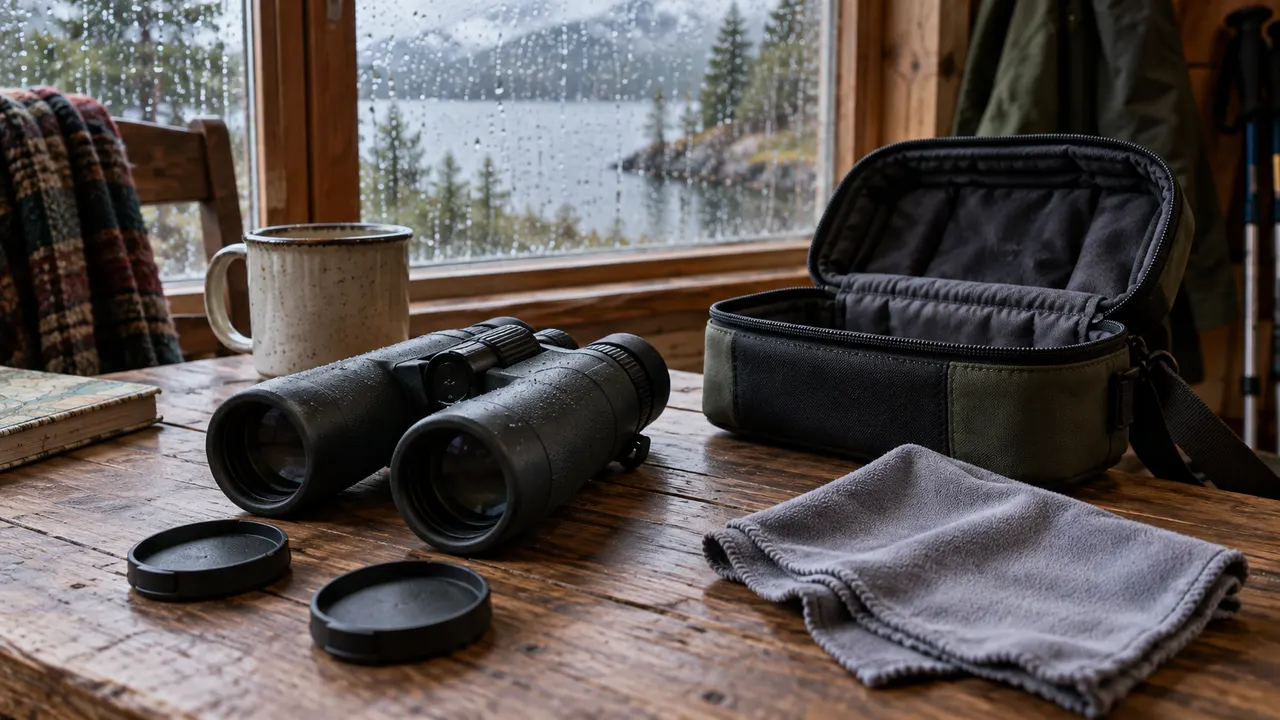
Take the binoculars out in a clean, dry place. Check the case lining and the parts of the strap that were against your wet coat. A case can feel dry outside while moisture remains in a fold or at the bottom.
Keep damp clothing away from the equipment. If you used a cloth outside, do not put it back beside the lenses without checking it. A cloth that has picked up grit or dirt should not be used as though it were still clean.
Follow the care instructions for the case and strap. Let permitted items dry before packing them together again. Do not put the binoculars on a radiator, use a hot hair dryer, or choose another improvised heat source to speed things up. If the manual specifies a drying method, follow that method.
Avoid rubbing a dirty lens
Look at the lenses before reaching for a cloth. Rain can leave marks, but dirt and grit are a different problem from a few water spots. Rubbing whatever is on the surface with a sleeve is a poor shortcut, particularly when that sleeve has been outside all afternoon.
Use the cleaning tools and method recommended for the optics. Keep lens-cleaning materials clean, and do not assume a household glass cleaner is suitable. When you are unsure, ask rather than experimenting with a product that happens to be nearby.
You do not need to polish the lenses every time you return from a walk. Inspect them and clean only as needed using the appropriate method. Unnecessary wiping adds handling without necessarily improving the view. Replace the caps when the equipment is ready to be stored, following the manufacturer’s guidance.
Work on a clear surface where the binoculars cannot easily be knocked down. Keep drinks and cleaning products away from the work area. It is easier to take your time when you are not balancing the case on a chair or moving other belongings around it.
Know when the problem needs more than drying
Look through the binoculars at a stationary subject once they are ready to use again. Check whether the view is clear and whether the controls feel as expected. Avoid forcing a control that has become stiff or behaving as though a sudden change is normal.
If you suspect moisture inside the binoculars, contact the manufacturer or a suitable repair service. Do not take the instrument apart to reach a fogged surface. An internal problem is different from a mark on an accessible outer lens, and it needs the right assessment.
Describe what happened when asking for help: the conditions, how the pair was carried, what you noticed, and which care steps you followed. Keep the model details available. That information is more useful than simply saying the binoculars got wet.
Set up the bag for the next outing
Before packing, check that the case is ready for storage and that no damp cloth or accessory has been left inside. Put lens caps and permitted cleaning supplies where you can find them. Close pockets so small items do not fall out when you open the bag on a path.
Think about how the binoculars will be carried during the next walk. A case buried beneath lunch and a jacket is difficult to reach when the weather changes. Keep the protection you intend to use accessible, without leaving the equipment swinging loose or making the bag uncomfortable to carry.
Check the strap attachment points according to the instructions. If anything looks damaged or does not sit securely, deal with it before the next trip. A damp walk can reveal an awkward carrying arrangement, but you do not have to replace everything at once. Fix the specific problem you noticed.
Choose a storage place you will remember
Use a suitable dry storage location and follow the manufacturer’s recommendations. Avoid treating a car boot, a damp porch, or the bottom of a wet daypack as permanent storage. Keep the case where it is unlikely to be crushed beneath heavier items.
Leave a note with the binoculars if they need attention before their next use. Otherwise it is easy to forget a stiff control or a question you meant to ask once the pair is back in its case.
The useful habit is to check the whole carrying setup when you return: binoculars, case, strap, and cloth. When everything is ready, pack it together. The next walk then starts with equipment you have actually looked over, rather than a closed bag you hope is fine.